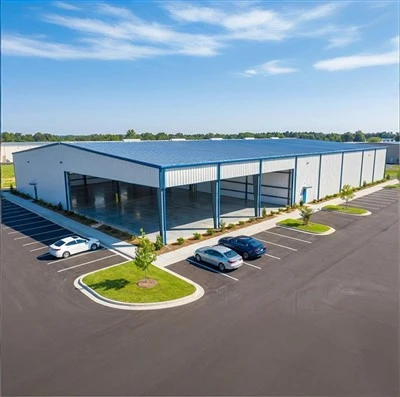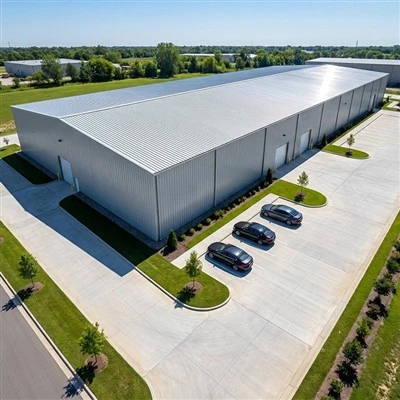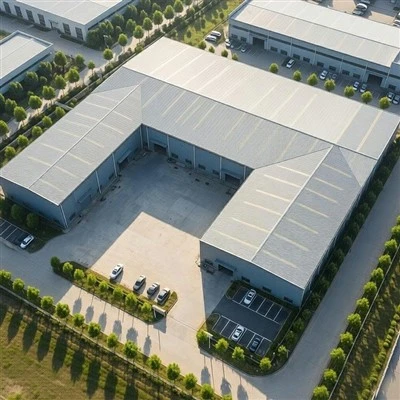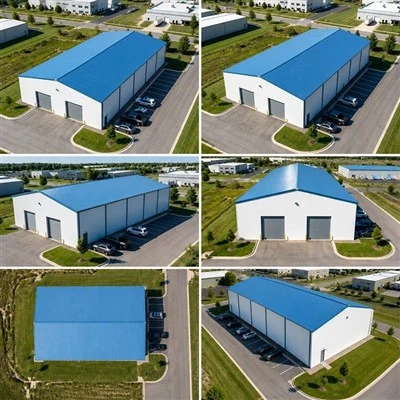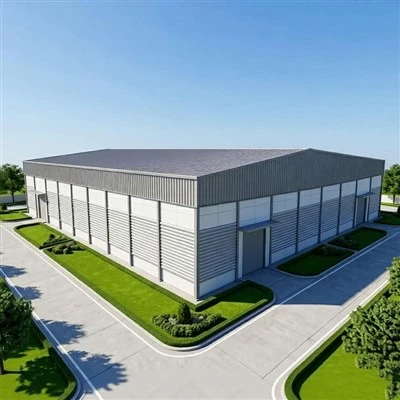
The fabrication of structural steelwork falls somewhere between the production of ordinary structural components (which have lower precision requirements) and precision machining (which demands high accuracy); connections are typically made via welding or bolting.
Common types of steel structures include bent frames for industrial plants; frame structures, frame-shear wall systems, and frame-tube systems for multi-story and high-rise buildings; and flat or curved space trusses (space frames) for large-span enclosures. The choice of structural form depends on the building's intended function. Steel structure design must adhere to national technical standards, ensuring advanced technology, economic viability, safety, practicality, and quality. Consequently, the following requirements must be observed during design and fabrication:
1. Select an appropriate and rational structural system based on the building's functional requirements. Aim for technical advancement and innovative structural design, achieving a harmonious integration of architecture and structure.
2. As steel structures (excluding vessels) are primarily composed of linear members, member dimensions should be modularized and standardized wherever possible to facilitate mechanized manufacturing, transportation, and installation, thereby enhancing productivity.
3. Utilize high-efficiency steel materials that offer superior economic value.
4. Connections (joints) are critical components of steel structures; appropriate connection methods must be selected to ensure the joint design aligns with the simplified models used in structural analysis. Since the vast majority of past structural failures have originated at connections, meticulous attention must be paid to both design and construction, employing advanced and reliable connection techniques.